
Personal Essay
by
Sony Ton-Aime
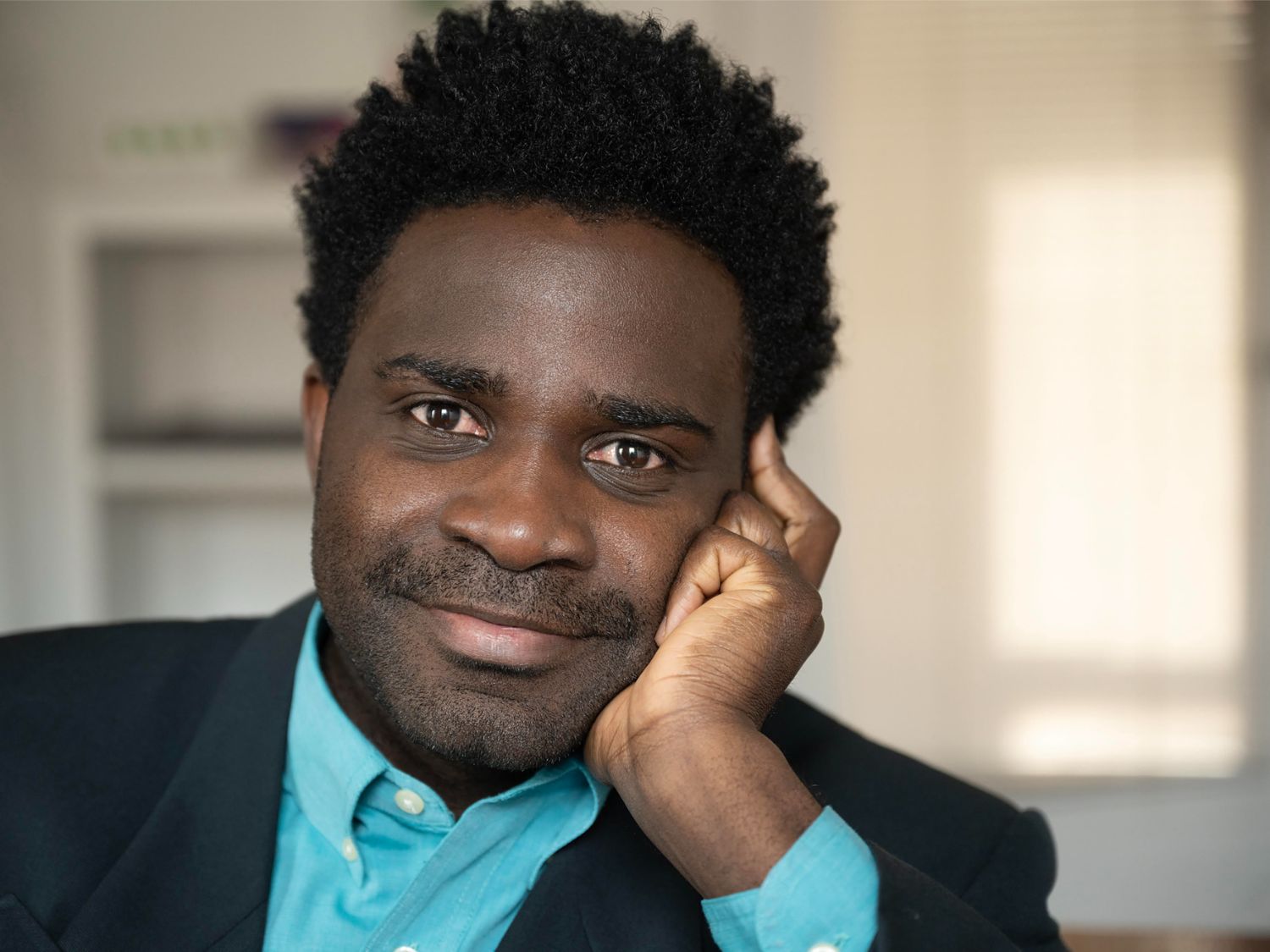
Sony Ton-Aime: "Why Do People Leave their Homes?"; Image credit: John Beale
On March 2, 2026, I learned the devastating news that a Haitian woman had died at a bus stop twenty minutes away from my house. It was one of the coldest weeks of the year. I did not know much about her besides that her name was Daphy Michel. I called some Haitian friends to inquire and learned that ICE had arrested her and dropped her in town, here in Pittsburgh, PA, some fifty minutes away from her house in Charleroi, PA.
I told myself that they had done it again. ICE had killed another immigrant. The month prior, on February 19, 2026, they had left a 56-year-old blind Rohingya refugee, Nurul Amin Shah Alam, to die in the cold streets of Buffalo, NY. I was terrified. In 2016, I had feared it would get to this point, and if my fears were correct, this was just the beginning. When, and it is a matter of time, Americans fully understand the danger of climate change, building a wall would be the most humane thing they would do.
There is a saying in Haiti that goes like this: “When the mango falls from the tree is not when the stem petrifies.” The cause always precedes the happening. Sometimes one needs to look beyond the bend to see the first domino that fell. And to put them back together, it is smarter and more efficient to go and lift the first domino. To solve any problem, one needs to diagnose the cause first.
For decades, the United States of America has been fighting mass migration coming from the Southern border with little success. Mass deportations, wall building, ICE terrorism, mass propaganda, this country has used everything to send immigrants back to our countries and discourage our families to come to its shores, with no success. After so many failed methods and so many years, it is reasonable to say that without a change in strategy, the U.S. will never be able to stop mass migration.
I believe so because those in power are trying to lift the domino next to their feet. They never care to look for the reasons why people are coming to the border en masse. They lie to themselves with such lofty concepts like the American Dream, as if someone would risk their life for a dream that, if it was real, could have been obtained anywhere in the world.
No, most people are not coming to the U.S. because they just learned that they could realize their dreams of freedom and wealth in the U.S. While these are very much things that most human beings crave, the U.S. is never the first choice for someone to try and make it happen. Before anyone makes it to the border, they have considered or tried most everything in their power. It is then important to ask what pushes someone to leave their home in the first place? Why and how do they leave?
It is common knowledge now that the U.S.’s meddling in these countries is the reason why so many are leaving home and coming here. It has been proven over and over that the U.S.’s interventions in the Global South have had devastating consequences. In Haiti alone, since the 1990s, there have been three major waves of migrations that I have been aware of and all of them were directly related to the U.S.’s policies or climate change.
In the early 1990s, after the military coup against then-President Jean-Bertrand Aristide, which had U.S. approval, many of his supporters were persecuted and had to leave Haiti to go to the U.S. Most of them came from Port-au-Prince, which had seen a big increase in its population in the 1980s. It was estimated that the population of the capital city in 1980 was 710,000. By 1991, when the coup happened, it had ballooned to 1.2 to 1.4 million, almost doubled. This with the coup was the immediate reason for the mass migration of the early 90s.
The real reason, however, was the internal migration that happened within the country. The population of Port-au-Prince doubled because a lot of the people living in the countryside had to leave their farms as a direct result of the U.S. President Jimmy Carter’s Food and Agriculture Act of 1977. The act subsidized the rice farmers in the south and encouraged them to farm more rice than they could consume or sell. The more they produced the bigger the subsidizing.
In the 1980s, they had produced so much rice that it was cheaper for them to simply send it to Haiti for almost nothing. The rice farmers in Haiti could not compete. They could not rely on their farms to survive anymore. Many made their way to the capital city to look for the scant factory jobs there. Their children grew up in slums, unemployed, and some were doing the biddings of politicians.
When the 1991 coup happened, many were either desperate or had declared allegiance to the populist Aristide, the first democratically elected president in the country’s history and in whom a lot of the poor people saw a savior.
The second wave of migration happened a decade later, in the early 2000s.
The first sign was the devastating flood, caused by Hurricane Jeanne, in September 2004 that hit the Northeastern part of Haiti, most specifically the city of Gonaives, the most important and biggest city in the Valley of Artibonite. The Valley of Artibonite had and still has the biggest rice culture in Haiti. While some 1,300 people perished and some 100,000 were displaced, the scientists at NASA correctly observed that “The floods in northeastern Haiti could be doubly devastating because they may have destroyed much of the country’s agriculture. Gonaives and the surrounding land, the Artibonite region, is the country’s breadbasket.”
Many farmers from Artibonite went to Port-au-Prince. During the same time, just two years prior, I had seen the first wave of migration to my hometown, Ouanaminthe. People came from all over the country and moved to my small town in search of jobs. In July 2002, the Haitian Parliament, under the influence of the U.S. State Department, passed the Investment Law and the Free Trade Zone (FTZ) Law, which granted foreign businesses special incentives like up to 15-year income tax exemptions and duty-free import of capital goods for qualified commercial and industrial zones.
In 2003, then President Aristide (the same one from 1991) confiscated and sold some of the most arable land by the Massacre River to foreign companies. Despite protests from the farmers, the project went on. For us this was the beginning of nature’s defeat. Industrialization was winning and it was coming for the earth.
Many of my family members and neighbors lost their little farms. Forced to leave their villages, they moved to our town (Ouanaminthe). Their sons and daughters compete with newcomers for factory jobs on the land that they were supposed to inherit and cultivate.
Instead of the horses, mules, and donkeys they used in the countryside for transportation, they had to buy motorcycles like everyone else in town. Some became taxi drivers. Some cleaned houses. All of them struggled. Food became more expensive in the absence of the farms. Everyone competed for imported food–food that cost the same as it did here in the U.S. Haitians who were making $700 annually were paying the same price as Americans who were making almost 100 times more on average.
With the natural catastrophes and the decimation of farming, man-made or due to erosion and the effects of climate change, life became unattainable in Ouanaminthe. This was when the third wave of migration started. But unlike before, most of the people did not come to the U.S. Some, the older and those without higher degrees, went to the Dominican Republic. Others, the younger ones with bachelor’s and master’s degrees went to Brazil and Chile.
The U.S. had made it easier for people in South America and the Caribbean to move to countries like Brazil by lobbying their governments to enact immigration policies that would attract migrants like Haitians and Venezuelans. While this provides an alternative for migrants, it is temporary, because the jobs they can get in these countries as migrants did not pay enough either. They eventually need to make their way to the U.S.
By the time migrants arrive at the southern border, many of them have moved to another place within their countries or the neighboring countries. If we could stay and live a normal life, we would not risk our lives in this cold country where ICE officers seem to have carte blanche to kill us. The devastations wrecked by U.S. policies and the effects of climate change left us no other option. We will continue to look for better opportunities for ourselves and our families. And these opportunities are becoming fewer and fewer due to the changing climate and policies that do not consider our existence.
Sony Ton-Aime
Sony Ton-Aime is a Haitian poet, essayist, translator, and Executive Director of Pittsburgh Arts and Lectures. He is the author of the poetry collection, Konbit (2026, CMU Press), the chapbook, LaWomann (2019), the Haitian Creole translation of Olympic Hero: The Lennox Kilgour's Story, and co-founding editor of ID13.
SUBSCRIBE
Witness publishes art, media, and journalism about people's lived experiences of immigration. Subscribe to receive updates when new issues are published.