
Comic
by
Rosa Colón: Visual Artist
Helen Gerhardt: Original Text
“Cinderblocks and Smiley-faced Slippers”
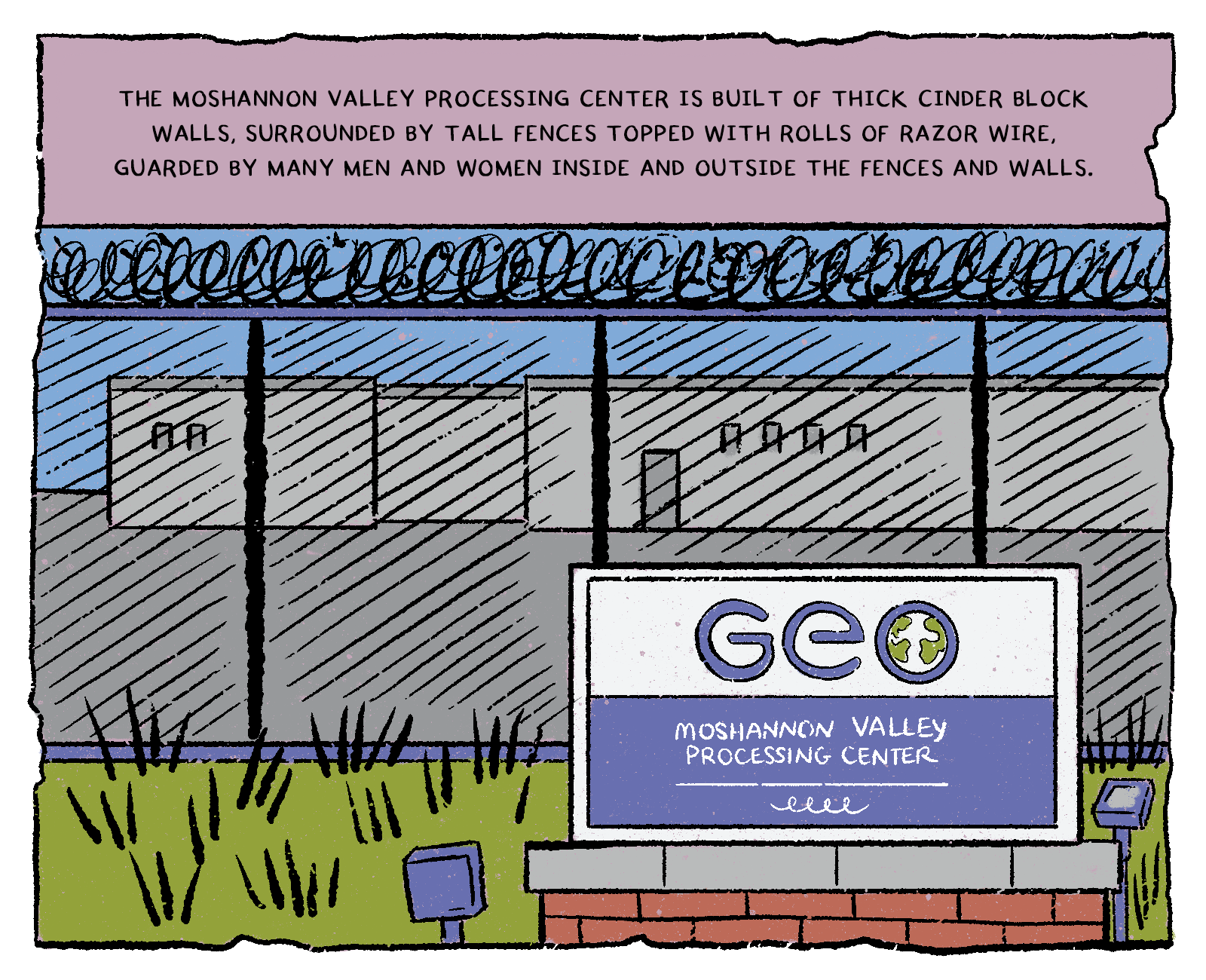
The Moshannon Valley Processing Center is built of thick cinder block walls, surrounded by tall fences topped with rolls of razor wire, guarded by many men and women inside and outside the fences and walls.
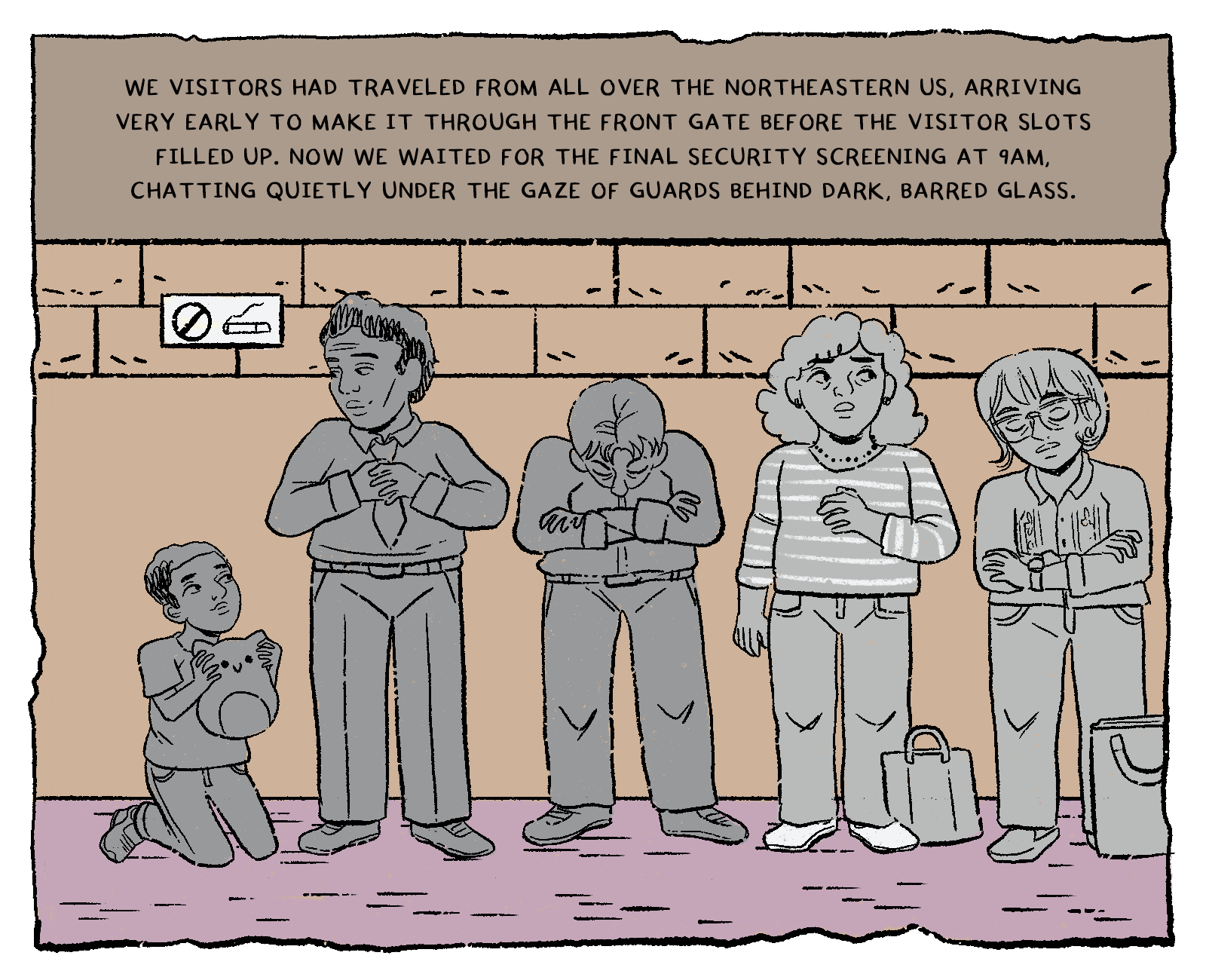
We visitors had traveled from all over the northeastern US, arriving very early to make it through the front gate before the visitor slots filled up. Now we waited for the final security screening at 9am, chatting quietly under the gaze of guards behind dark, barred glass.
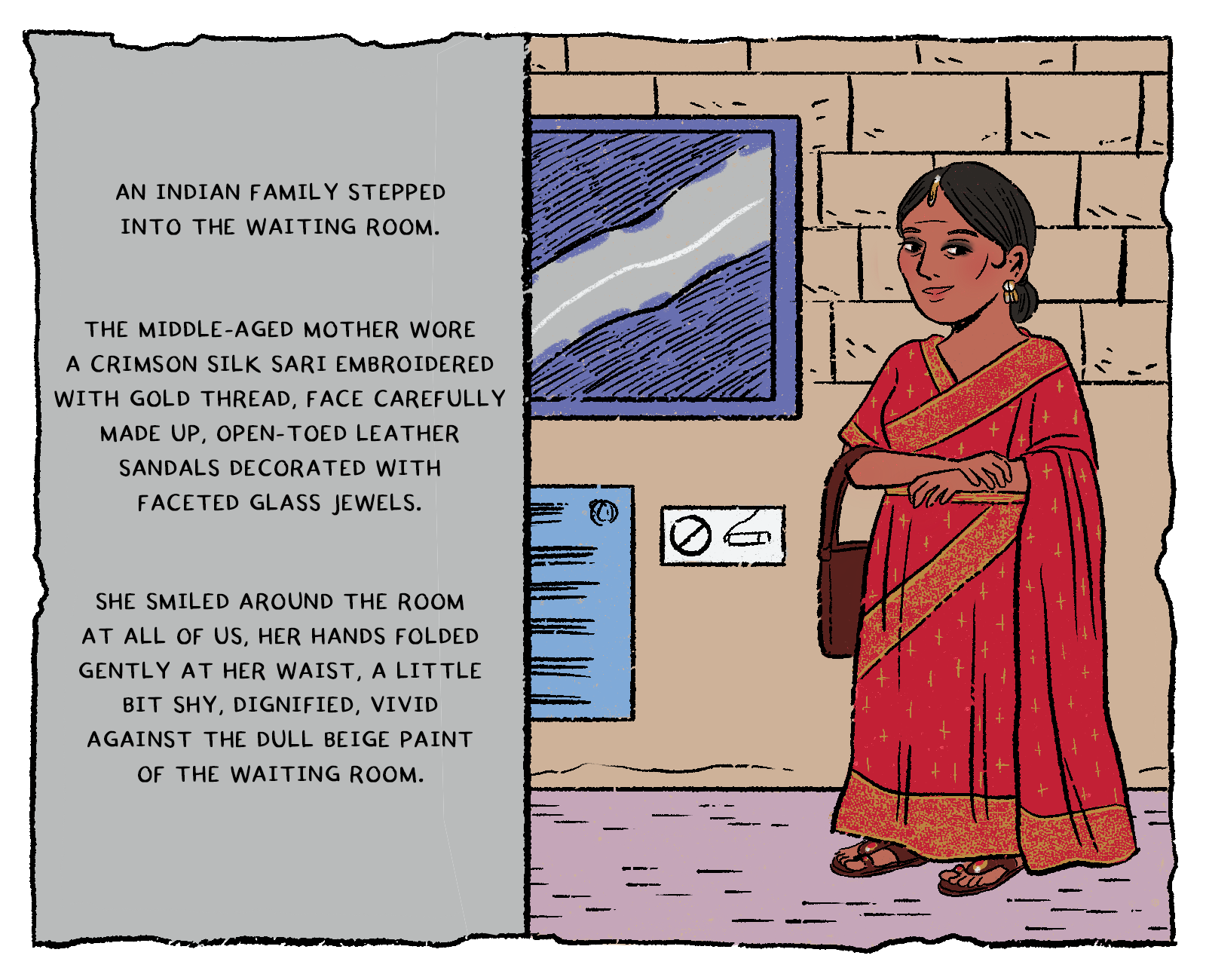
An Indian family stepped into the waiting room. The middle-aged mother wore a crimson silk sari embroidered with gold thread, face carefully made up, open-toed leather sandals decorated with faceted glass jewels. She smiled around the room at all of us, her hands folded gently at her waist, a little bit shy, dignified, vivid against the dull beige paint of the waiting room.
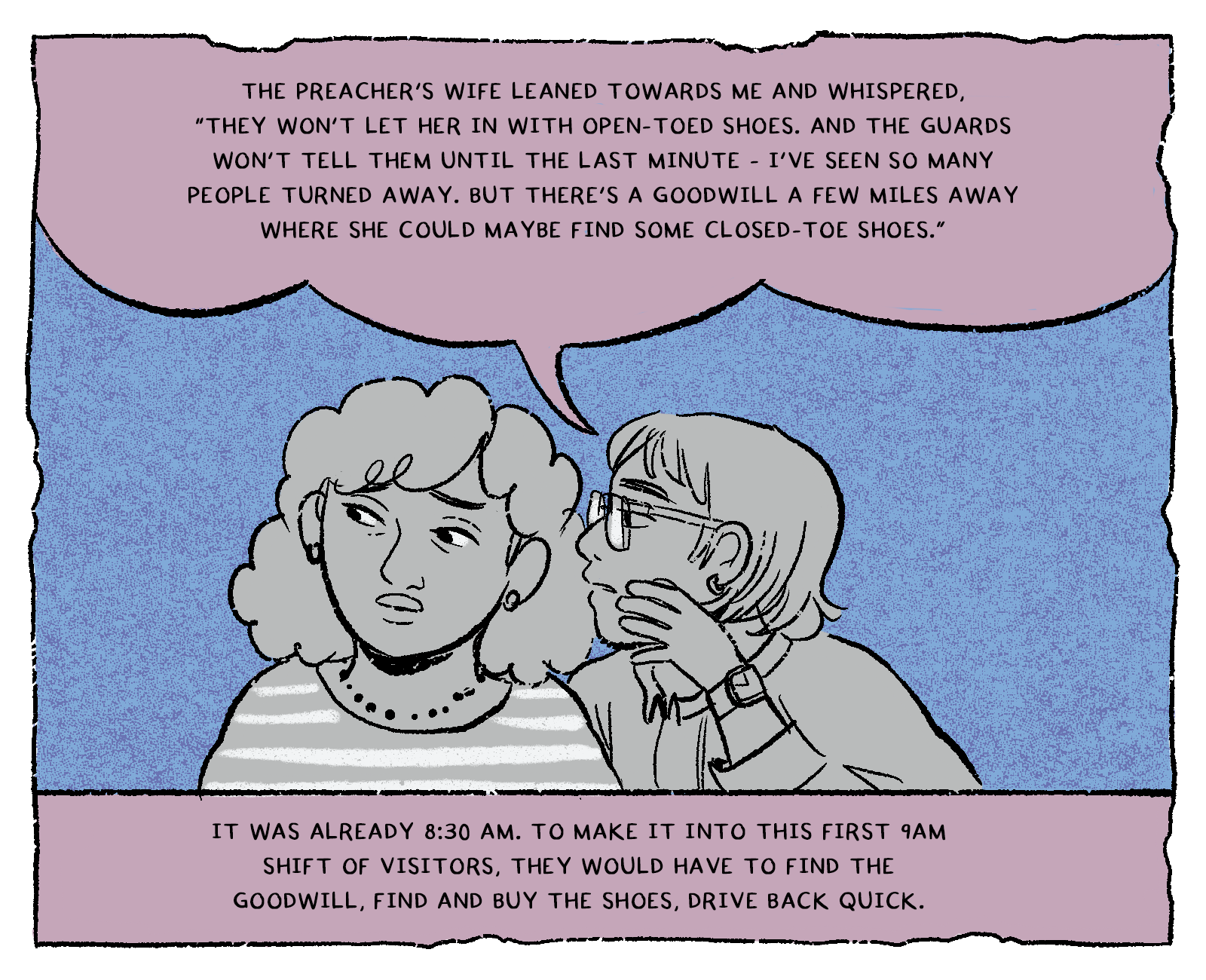
The preacher's wife leaned towards me and whispered, "They won't let her in with open-toed shoes. And the guards won't tell them until the last minute — I've seen so many people turned away. But there's a Goodwill a few miles away where she could maybe find some closed-toe shoes." It was already 8:30 am. To make it into this first 9am shift of visitors, they would have to find the Goodwill, find and buy the shoes, drive back quick.
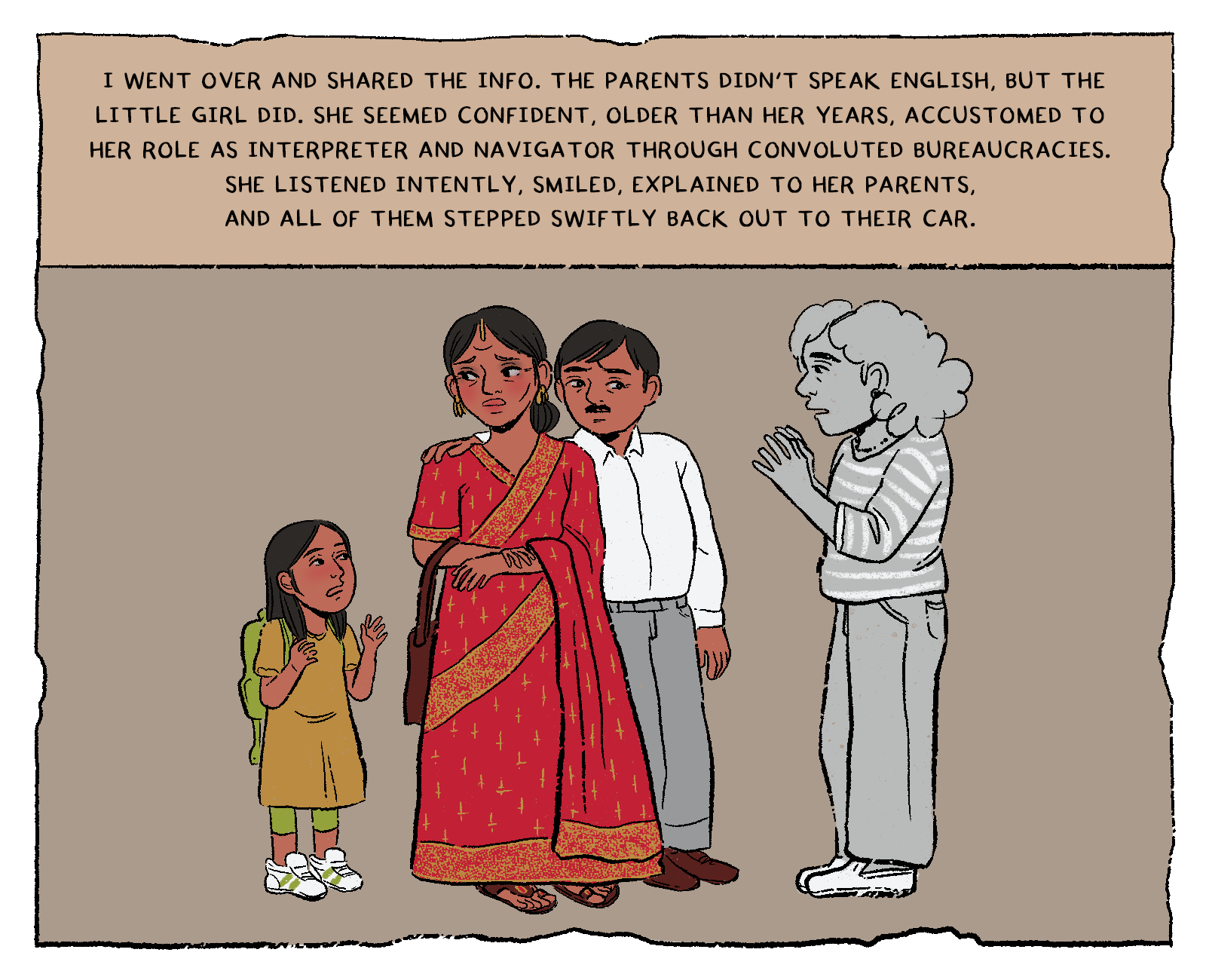
I went over and shared the info. The parents didn't speak English, but the little girl did. She seemed confident, older than her years, accustomed to her role as interpreter and navigator through convoluted bureaucracies. She listened intently, smiled, explained to her parents, and all of them stepped swiftly back out to their car.
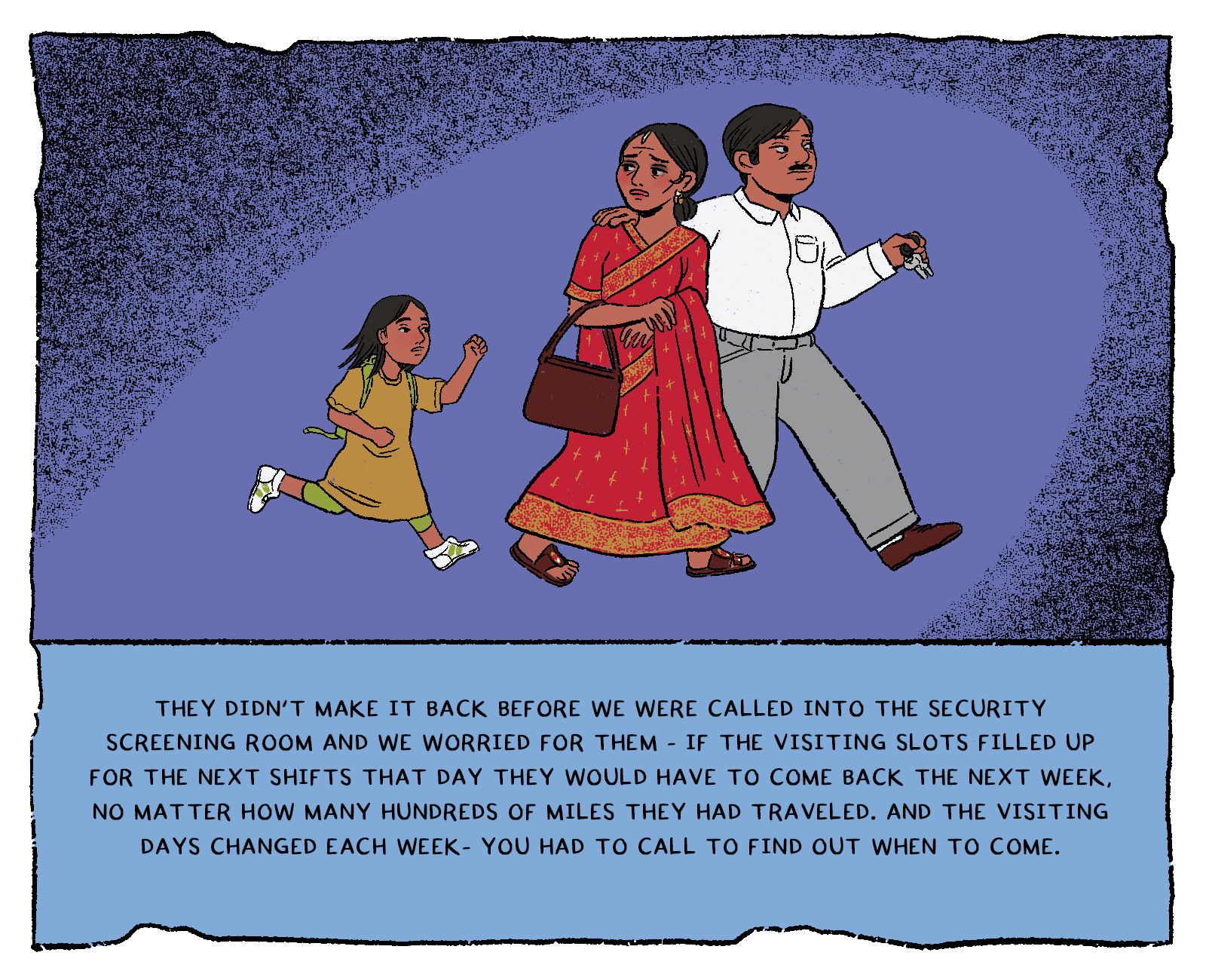
They didn't make it back before we were called into the security screening room and we worried for them — if the visiting slots filled up for the next shifts that day they would have to come back the next week, no matter how many hundreds of miles they had traveled. And the visiting days changed each week — you had to call to find out when to come.
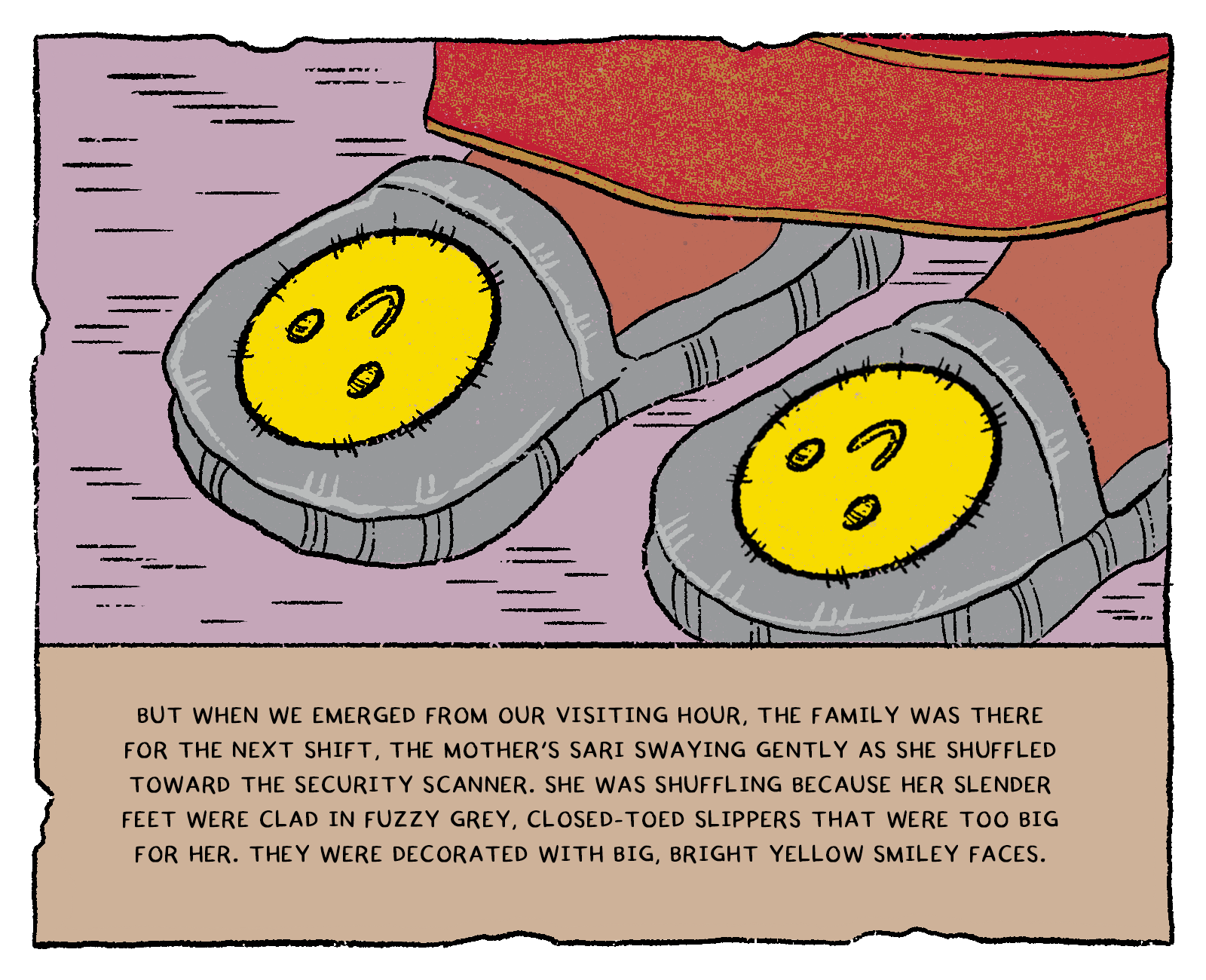
But when we emerged from our visiting hour, the family was there for the next shift, the mother's sari swaying gently as she shuffled toward the security scanner. She was shuffling because her slender feet were clad in fuzzy grey, closed-toed slippers that were too big for her. They were decorated with big, bright yellow smiley faces.
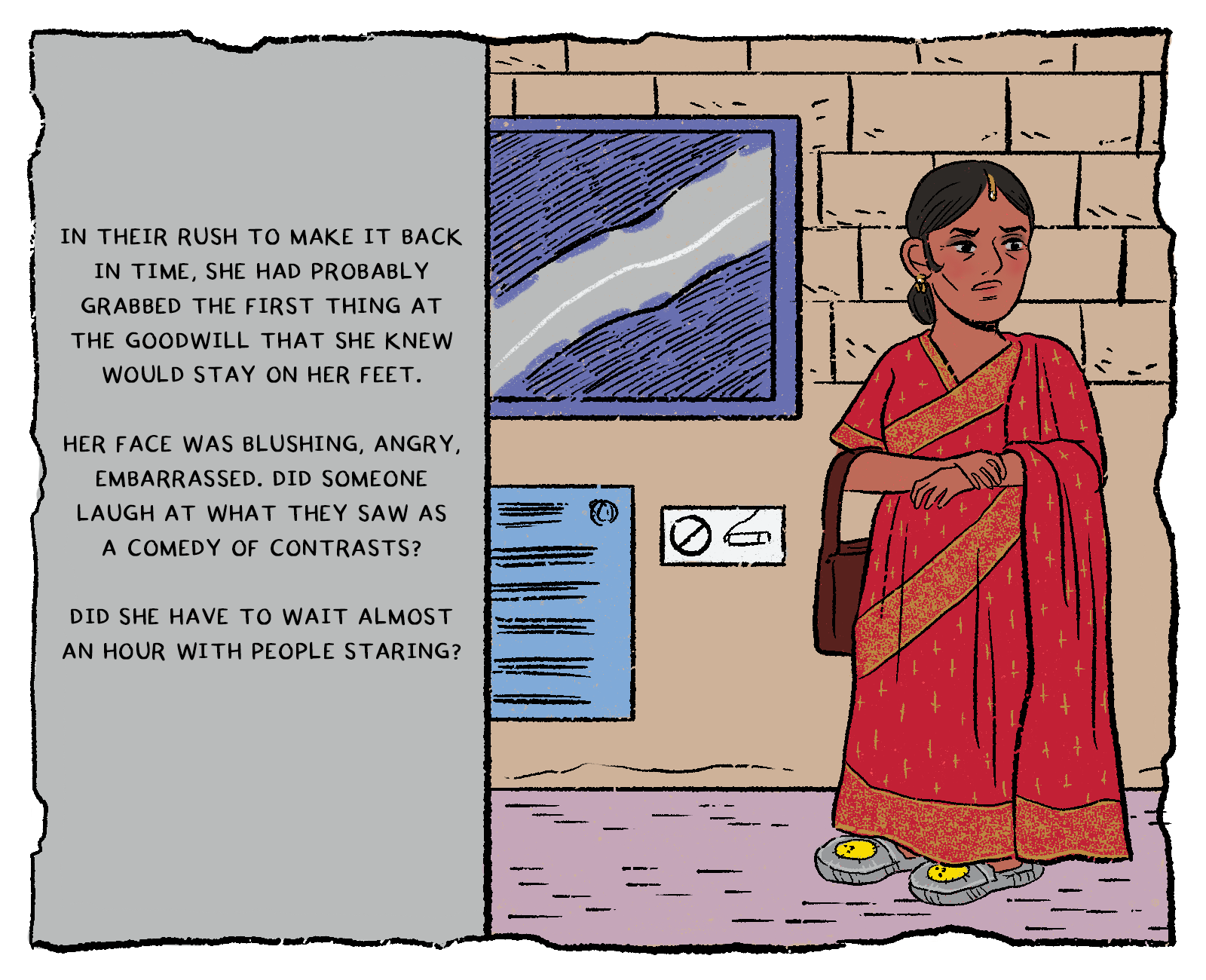
In their rush to make it back in time, she had probably grabbed the first thing at the Goodwill that she knew would stay on her feet. Her face was blushing, angry, embarrassed. Did someone laugh at what they saw as a comedy of contrasts? Did she have to wait almost an hour with people staring?
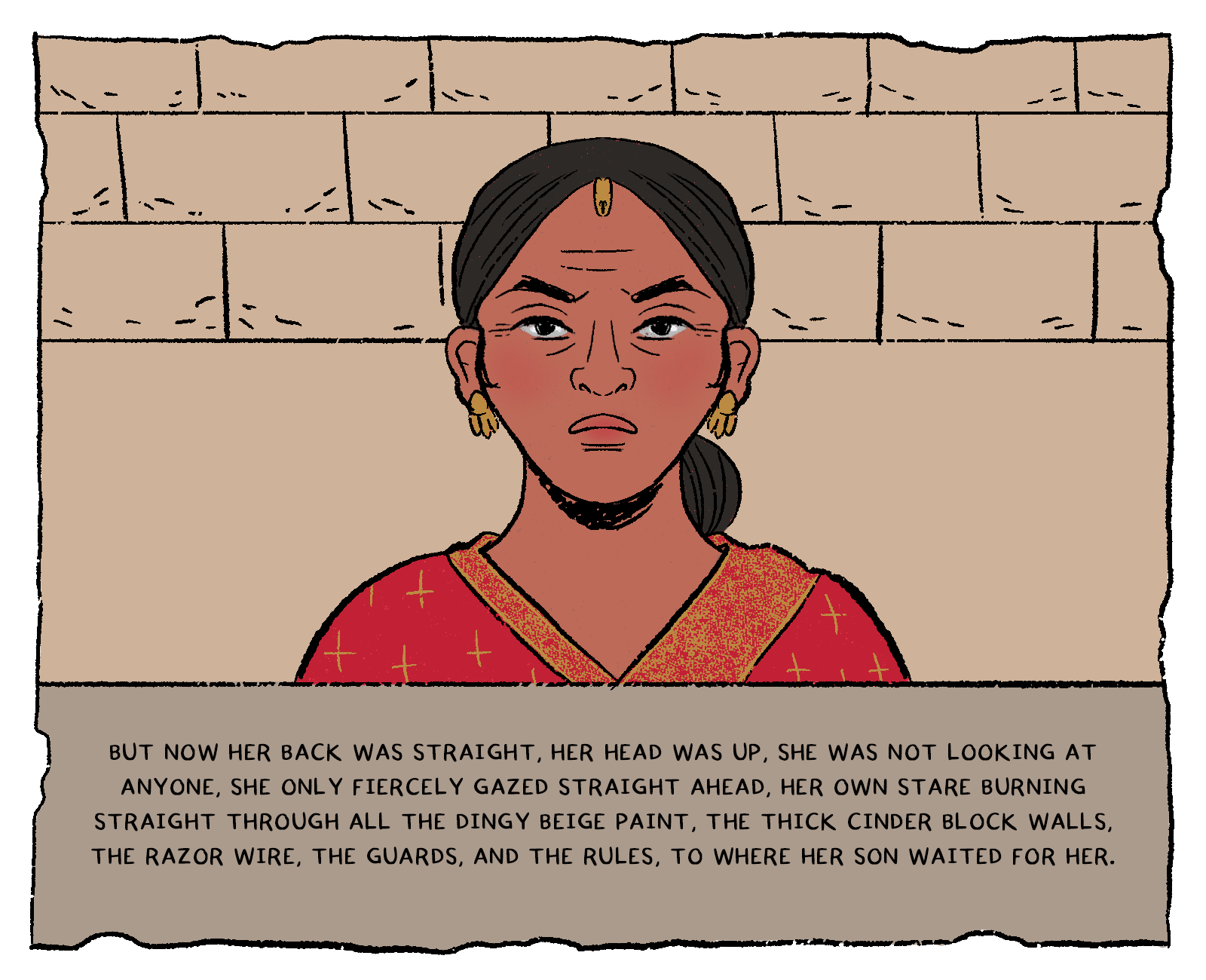
But now her back was straight, her head was up, she was not looking at anyone, she only fiercely gazed straight ahead, her own stare burning straight through all the dingy beige paint, the thick cinder block walls, the razor wire, the guards, and the rules, to where her son waited for her.
"Cinderblocks and Smiley-faced Slippers". Comic by Rosa Colón. Research and accounts by Helen Gerhardt
Rosa Colón: Visual Artist
Helen Gerhardt: Original Text
Rosa Colón Guerra has been self-publishing comics for over twenty years in Puerto Rico as Soda Pop Comics. She has a BA in Humanities-Fine Arts from the University of Puerto Rico (Río Piedras) and an MA in Sequential Art and Illustration from the University of Brighton. She's been published in The Nib, The Believer, The Lily (Washington Post), and various Anthologies. Rosa collaborated on Puerto Rico Strong (Lion Forge), winner of the Eisner for Best Anthology 2019, and Be Gay, Do Comics! (The Nib), winner of the Ignatz for Outstanding Anthology 2020. She is also part of the collective Les Insu, where they focus on the local illustration community. She's represented by Marietta B. Zacker (Galt & Zacker).
Helen Gerhardt's narrative essays have been featured in The New York Times, the Pittsburgh Post-Gazette, and National Public Radio. A long time community organizer, she is currently Chair of the Global Switchboard's Detention Support Working Group.
Helen Gerhardt's narrative essays have been featured in The New York Times, the Pittsburgh Post-Gazette, and National Public Radio. A long time community organizer, she is currently Chair of the Global Switchboard's Detention Support Working Group.
SUBSCRIBE
Witness publishes art, media, and journalism about people's lived experiences of immigration. Subscribe to receive updates when new issues are published.